How to Onboard Remote Engineers in 30 Days


Onboarding remote engineers effectively in 30 days requires a clear, structured plan. Without in-person interactions, new hires rely on organized guidance to understand tools, workflows, and expectations. Here's why it matters: 20% of employees leave within the first 45 days and 29% of new hires feel unprepared for their roles. A strong onboarding process can reduce turnover by 54% and help engineers become productive 62% faster.
Key Steps to Onboard Remote Engineers:
- Days 1-7: Set up tools, ensure access, introduce team members, and conduct orientation and security training.
- Days 8-14: Integrate into team workflows, attend meetings, review documentation, and start pair programming.
- Days 15-21: Assign first projects, provide regular feedback, and encourage team bonding through virtual activities.
- Days 22-30: Transition to more complex tasks, track performance, and gather feedback to improve future onboarding.
This 30-day roadmap ensures remote engineers feel supported, connected, and ready to contribute. Companies with such plans see 82% higher retention and a 70% productivity boost.
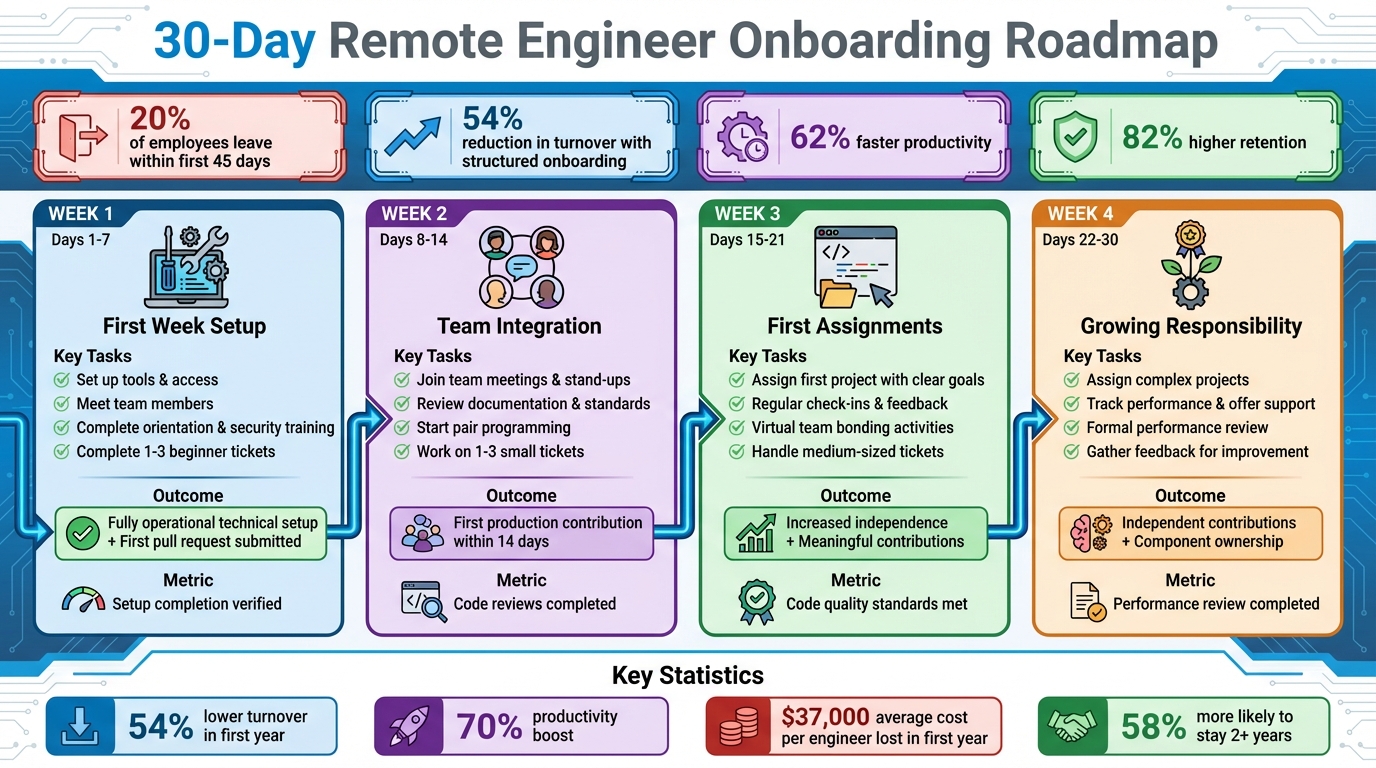
30-Day Remote Engineer Onboarding Timeline with Key Milestones and Metrics
Building a Great Remote Hiring & Onboarding Process for Engineers
Days 1-7: First Week Setup
The first week is all about laying the groundwork for success. Ensuring immediate access to tools and facilitating meaningful team introductions can help avoid early roadblocks.
Setting Up Tools and Access
To ensure a smooth start, ship essential equipment - like a laptop, monitor, keyboard, mouse, and headset - to the new engineer’s address at least a week before their start date [10]. Pre-install any necessary software, including code repositories, project management tools, and communication apps, so they’re ready to go from day one [4].
Create a company email and set up accounts for all required platforms in advance. Provide a single document that outlines the purpose of each tool, along with links and tutorials, to make navigation easier [4] [11]. Clearly define communication norms, such as which channels to use for specific purposes, expected response times, and proper etiquette for emails and chats [4].
"Remote workers must rely more heavily on software and tools to collaborate and drive workflows." - Remote [5]
Assign an IT contact or set up a remote service desk to handle technical issues quickly [2]. Consolidate all company resources, documentation, and learning materials in one accessible location, like an internal wiki, company intranet, or onboarding platform, so new hires can find everything they need without frustration [6].
Once tools are in place, the focus can shift to building connections within the team.
Meeting the Team
During the first week, schedule one-on-one video calls with key team members. Start with a meeting with the direct manager, followed by introductions to close collaborators. Keep these sessions informal to encourage rapport-building. Assign a technical mentor to assist with code-related questions and a culture buddy to help the new hire navigate unwritten norms and communication styles.
For remote engineers, structured introductions are vital since they don’t have the benefit of picking up on informal office cues. Early, clear interactions help establish trust and create a comfortable environment for asking questions from the start.
After meeting the team, the next step is to complete orientation and security training.
Completing Orientation and Security Training
Offer orientation sessions tailored to remote work. Cover topics like time management, effective communication, and strategies for maintaining work-life balance [9]. Share the company’s values and mission, connecting these principles to day-to-day tasks [9]. Use a mix of concise video presentations, live Q&A sessions, and digital handbooks to communicate company policies effectively [9].
Security training is a must for remote employees. Remote setups can introduce risks such as unsecured home networks, physical security vulnerabilities, and unauthorized tool usage [8]. Provide a clear walkthrough of development workflows and security protocols, including VPN setups, branch strategies, and access controls [8].
| Security Vulnerability | Mitigation Approach | Verification Method |
|---|---|---|
| Unsecured home networks | VPN requirements and configuration guidance | Connection verification tests [8] |
| Physical security risks | Clear desk policies and security training | Periodic security assessments [8] |
| Shadow IT adoption | Pre-approved tool lists with quick approval | Device management software [8] |
| Insecure knowledge sharing | Secure documentation platforms with access controls | Permission audits [8] |
Days 8-14: Team Integration and Workflow Learning
After a smooth setup in week one, the second week is all about diving deeper. This is when remote engineers move from setup to active involvement, focusing on understanding team operations, workflows, and starting to make meaningful contributions [8].
Joining Team Meetings and Daily Stand-Ups
Make sure the new engineer is part of all regular team meetings, daily stand-ups, and sprint planning sessions. These meetings are key for understanding project priorities, team dynamics, and how decisions are made. During stand-ups, encourage them to share their progress - this builds both accountability and a sense of belonging.
Daily check-ins with their manager are essential to address questions and make any necessary adjustments [8]. Remote engineers miss out on the spontaneous learning that happens in an office setting, so structured communication becomes even more important. Let them know that asking questions is not just okay but encouraged - it's always better to overcommunicate than to stay silent [2].
Once team interactions are established, the next step is mastering the team’s documentation and standards.
Learning Documentation and Standards
Point the engineer to a centralized hub for documentation that includes coding standards, workflow guidelines, and project-specific details. Having all this information in one accessible place makes it easier for them to get up to speed [3].
"Remote hires shouldn't have to click around aimlessly to find the answers to their questions - organize documents in logical and easily-to-access files, and optimize documents for digital use." - Jefferson Frank [2]
To avoid overwhelming them, schedule short, focused sessions to go through key documents. Use screen sharing to walk them through important sections, explaining how these standards apply to their daily tasks. This hands-on approach not only clarifies the rules but also shows why they matter and how they fit into the bigger picture.
This groundwork sets the stage for pair programming, a crucial step in their integration.
Starting Pair Programming Sessions
Pair programming is a fantastic way for remote engineers to get familiar with the codebase while building connections with their teammates. Assign 2–3 tickets for them to tackle on their own, but also schedule collaborative pair programming sessions with experienced team members [8]. This combination speeds up learning and encourages real-time problem-solving.
Introduce buddy systems to provide extra support. For example, assign a "Slack buddy" or orientation partner who can answer questions and boost their confidence early on [8][1][3]. Research shows that proper support during onboarding can make new hires 54% more productive [3].
"Buddy programs boost new hire proficiency." - Owl Labs Staff [3]
These activities do more than just teach technical processes - they also help build trust and camaraderie within the team. A strong buddy relationship can act as a safety net, preventing small frustrations from snowballing into bigger issues or even leading to resignation [1].
Days 15-21: First Assignments and Feedback
As week three rolls in, the focus shifts from setup and integration to hands-on work and feedback. This is where remote engineers start applying their skills to real projects, building confidence and momentum. Here's how to make this transition smooth and productive.
Assigning the First Project with Clear Goals
The first project sets the tone for the engineer's experience, so it’s important to choose wisely. Aim for a task that involves meaningful development work, keeping administrative duties to less than 40% of their time [11]. From the outset, outline the project’s objectives, timeline, and key milestones [11]. For complex tasks, break them into smaller, manageable steps. This not only prevents overwhelm but also allows for early wins, showcasing progress and impact right away [1].
The goal here isn’t to push limits - it’s to help the engineer feel their contributions matter. A well-structured project boosts confidence and sets the stage for continued success.
Keeping Momentum with Regular Check-Ins and Feedback
Once the project is underway, consistent communication is key. Use a mix of daily Slack check-ins, weekly one-on-one video calls, and a structured 30–45 minute feedback session to review progress, address challenges, and celebrate achievements [11][3][1]. Feedback should flow both ways - this helps managers fine-tune the onboarding process while ensuring engineers feel heard.
To keep these check-ins focused, consider using a shared document where the engineer can jot down questions or discussion points as they come up [2]. This approach not only streamlines conversations but also helps identify and resolve potential issues early. Remember, the relationship with their direct manager plays a huge role in long-term engagement and retention [13]. Make these interactions meaningful.
Strengthening Team Bonds with Virtual Activities
Technical skills are just one part of the equation - feeling connected to the team is equally important. Week three is a great time to nurture these connections. Organize short virtual coffee breaks or lighthearted team games to create opportunities for informal interaction. These casual moments go a long way in building team camaraderie [12].
sbb-itb-88a7fe6
Days 22-30: Growing Responsibility and Performance Tracking
By the time days 22–30 roll around, remote engineers begin transitioning from learning the ropes to taking on more responsibility. This phase shifts the focus from guided integration to independent contribution, building on the groundwork laid in earlier weeks.
Assigning More Complex Work
Now’s the time to introduce more challenging tasks - think owning entire components, leading smaller initiatives, or tackling projects that demand a deeper understanding of the system. These assignments naturally build on the foundational projects from earlier stages. To set engineers up for success, define clear goals, timelines, and intermediate milestones for each project. This structure helps them stay organized and avoid feeling overwhelmed or uncertain about their direction [4].
Communication is key here. Overcommunicate when assigning tasks - break down deliverables, explain the reasoning behind decisions, and address any knowledge gaps. If the work requires new skills, pair these assignments with tailored training or mentorship. The aim isn’t just to get the task done but to ensure the engineer is growing toward long-term independence.
Tracking Progress and Offering Support
This is also the time to formally evaluate progress. Use a performance review to assess how the engineer is doing and to provide targeted resources or solutions for any challenges they’re facing. Focus on measurable outcomes like code quality, contribution speed, and how well they’re collaborating with the team. Keep feedback channels open and accessible, so they feel supported every step of the way [2].
Managers play a crucial role during this phase. As Leapsome points out, "Managers must be actively involved in onboarding and ensure their employees know what is expected of them and how best to collaborate" [7]. When managers disengage, it creates a gap between company policies and day-to-day practices, leading to unnecessary confusion. Consistent involvement ensures the onboarding process stays on track and sets the engineer up for success.
Completing the Onboarding Process
As the 30-day mark approaches, wrap up the onboarding process by reinforcing the engineer’s growth and readiness for future challenges. Gather feedback through surveys or one-on-one conversations. Ask questions like: What worked well? What didn’t? What could have helped them ramp up faster? These insights not only improve the experience for future hires but also highlight areas for immediate improvement. After all, companies with strong onboarding programs can see up to an 82% increase in employee retention and a 70% boost in productivity [1].
30-Day Onboarding Timeline Overview
Here’s a week-by-week breakdown of the 30-day onboarding process, detailing tasks, expected outcomes, and how progress is measured.
| Week | Goals & Tasks | Expected Outcomes | Measurement Metrics |
|---|---|---|---|
| Week 1 (Days 1-7) | - Set up technical environment and access - Meet key team members - Join communication channels - Review company values and principles - Complete 1-3 beginner-friendly tickets |
- Fully operational technical setup - HR tasks and account setup finalized - Basic understanding of team structure and company culture - First pull request submitted [8] - Familiarity with development processes |
- Verified setup completion - Access to all necessary systems - Completion of 1-3 small tickets - Documentation of first pull request [8] |
| Week 2 (Days 8-14) | - Participate in workflow and design meetings - Complete initial code reviews - Daily mentor check-ins - Work on 1-3 small tickets |
- Better understanding of workflows and branching strategies - Familiarity with code review practices - Strengthened connections within the team - First production contribution within 14 days [8] |
- Attendance in design meetings - Completion of code reviews - Version control logs for production contribution [8] |
| Week 3 (Days 15-21) | - Actively join technical discussions - Schedule regular 1-1s with development lead - Handle medium-sized tickets - Take part in virtual team-building activities |
- Meaningful participation in discussions - Increased independence in completing tasks - Stronger team relationships - Consistent adherence to code quality standards |
- Quality of technical input - Ticket completion speed - Code review acceptance rates - Feedback on team integration |
| Week 4 (Days 22-30) | - Tackle complex projects and lead smaller initiatives - Take ownership of components - Undergo a formal performance review - Share onboarding feedback via surveys or 1-1s |
- Independent contributions to the codebase - Confidence in handling standard responsibilities - Clear understanding of role expectations - Suggestions for onboarding improvements |
- Code quality assessments - Contribution efficiency - Collaboration metrics - Completion of performance review |
Research shows that structured onboarding helps remote engineers reach full productivity 62% faster compared to unstructured approaches. Additionally, companies with a streamlined onboarding process see 54% lower turnover among technical staff within the first year [8]. This timeline ensures remote engineers experience steady progress and clear expectations throughout their first month.
Conclusion
A well-structured 30-day onboarding plan can transform how remote engineers integrate into your team. The numbers back it up: companies with effective onboarding processes see new hire retention jump by 82% and productivity improve by over 70% [14]. Considering the average cost of $37,000 for each engineer who leaves within their first year [8], the importance of getting onboarding right becomes crystal clear.
This approach reinforces the importance of structured, data-informed onboarding. By offering a clear roadmap from day one through day 30, the plan wipes out uncertainty and sets clear expectations. Remote engineers can achieve full productivity 62% faster [8], thanks to explicit weekly milestones that guide them toward becoming independent contributors.
Beyond productivity, structured onboarding fosters deeper engagement. Engineers who go through such a process are 58% more likely to stay with the company for over two years [8]. Early connections with their team and a solid grasp of the codebase ensure they feel supported and prepared to excel.
The benefits go even further. A detailed onboarding plan directly impacts key metrics like retention and productivity while delivering long-term value. Companies that optimize remote engineering onboarding see 54% lower turnover among technical staff in the first year [8]. On the flip side, poorly onboarded engineers can drive up maintenance costs by as much as 30% due to technical debt [8].
This 30-day framework lays the groundwork for building a remote engineering team that doesn’t just perform but thrives. It ensures early wins and sets the stage for sustained success, creating a team that grows, stays engaged, and delivers outstanding results from the very beginning.
FAQs
What are the benefits of a structured 30-day onboarding plan for remote engineers?
A well-structured 30-day onboarding plan is essential for helping remote engineers settle into their roles efficiently. It streamlines key tasks like setting up equipment, creating necessary accounts, and assigning initial projects, enabling new hires to start contributing to team goals within a matter of weeks. Regular check-ins and milestone reviews further enhance this process by keeping employees engaged, offering constructive feedback, and helping them feel connected to the company culture - even when working remotely.
This kind of onboarding strategy has a direct impact on retention rates. Research shows that a positive onboarding experience significantly increases the likelihood of employees staying with a company long-term. A clear plan not only sets expectations but also builds a sense of belonging and ensures consistency across distributed teams. For businesses working with Remotely Talents, this framework integrates seamlessly, ensuring that remote engineers from Europe, Latin America, or North America are set up for success and productivity from day one.
How can companies help remote engineers feel connected during onboarding?
To help remote engineers feel connected and valued, focus on crafting a welcoming onboarding experience that prioritizes people over processes. Begin with a warm, personalized message from their manager and arrange informal virtual meetups with team members. These introductions not only ease them into the team but also give a glimpse of the company’s culture. Follow this up with regular check-ins - perhaps a short video call after their first day, then again after one week and one month. These conversations allow managers to see how they’re adjusting and tackle any concerns early.
Make sure they have everything they need before their first day. This includes access to essential tools like software, communication platforms, and project documentation. To encourage collaboration and build camaraderie, consider organizing activities such as pair programming sessions, virtual team-building exercises, or even online hackathons.
For extra support, you might explore Remotely Talents, a service that provides access to pre-screened remote engineering professionals and offers onboarding playbooks designed to improve connection and integration. By pairing thoughtful onboarding strategies with regular communication, companies can lay a strong foundation for their remote engineers’ long-term success.
What challenges do remote engineers face during onboarding, and how can companies overcome them?
Remote engineers often deal with hurdles like isolation, difficulty blending into company culture, and delays in getting access to essential tools or resources. On top of that, unclear project priorities and overly bureaucratic onboarding processes can leave new hires feeling out of sync with the team.
To tackle these challenges, companies should make sure everything - tools, accounts, and hardware - is ready to go before the new hire’s first day. A clear agenda for the first week can help set expectations, while assigning a mentor or "buddy" provides guidance on both technical tasks and company culture. Collaborative tools can keep communication flowing, and virtual team-building activities can help new hires feel part of the group. Streamlining administrative tasks with digital forms and pairing them with engaging orientation sessions can also make the onboarding experience smoother and more inviting.
Related Blog Posts
Read also



Ready to hire without salary-based agency fees?
Book a free 30-minute consultation. We’ll review your role, timeline, and hiring goals, then show you how our fixed-fee remote search works.