How to Hire a Content Creator in 2026: Skills, Roles, and Salary Guide

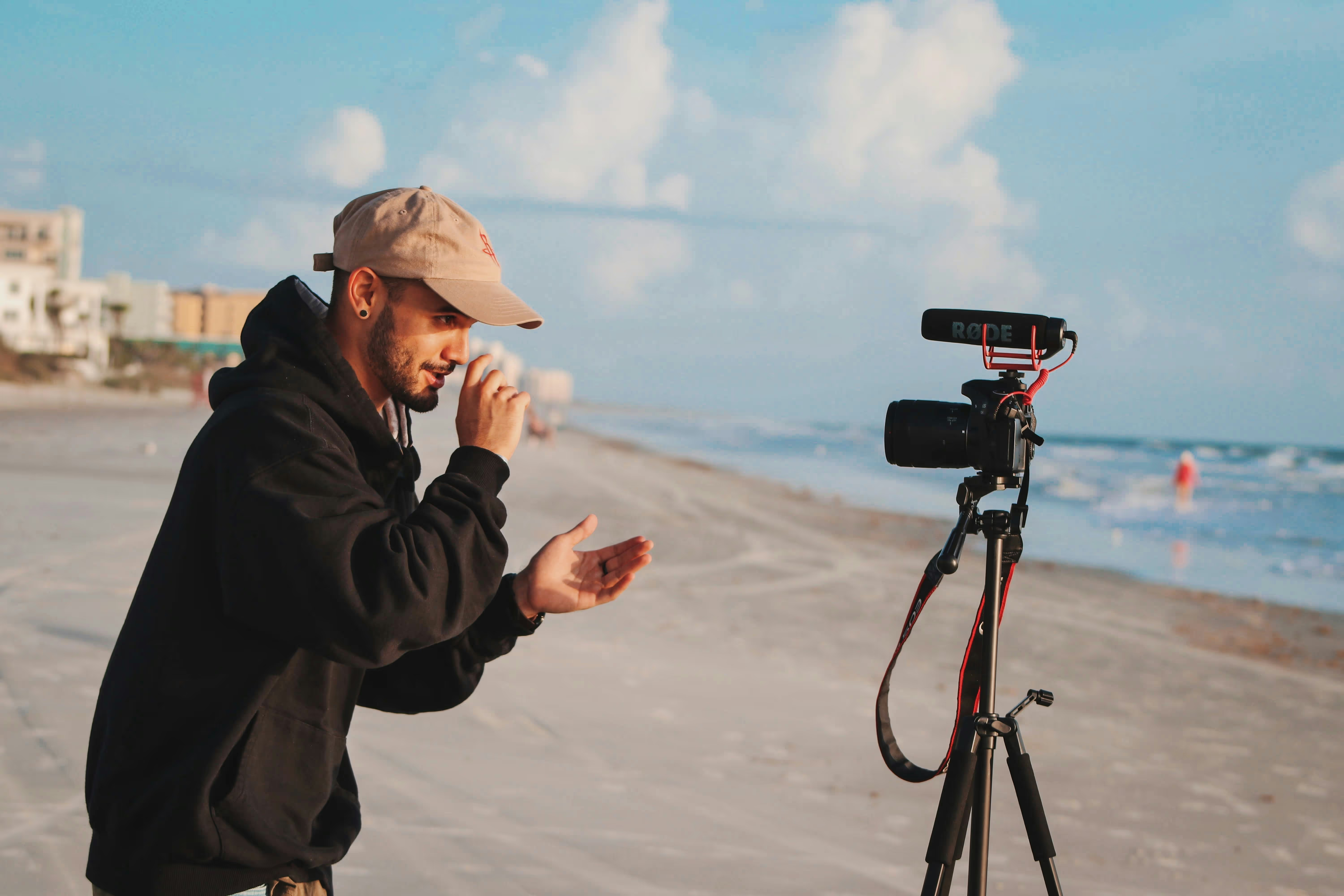
Content creators in 2026 are key to driving revenue, with video content making up over 80% of online traffic and user-generated content (UGC) being 8.7x more effective at driving purchases than influencer campaigns. To hire the right talent, focus on matching specific skills with your goals - whether it's TikTok videos, LinkedIn thought leadership, or UGC for paid ads. Here's what you need to know:
- Roles to Hire: UGC creators for authentic testimonials, short-form video editors for polished TikToks or Reels, and social media content creators for consistent platform-specific posts.
- Key Skills: Platform fluency, video production expertise, and understanding of performance metrics.
- Salary Insights: U.S. content creators earn a median of $66,320 annually, while freelance rates range from $25 to $250/hour. Nearshore talent in Latin America costs $3,000–$6,000/month.
- Hiring Tips: Use platforms like MarketerHire, Toptal, and Join Brands to find pre-vetted experts. Start with paid test projects to evaluate fit and performance.
Hiring the right content creator ensures your brand stays competitive in a market where 89% of marketers are increasing creator budgets. Focus on measurable results, platform-specific expertise, and aligning talent with your business objectives.

Content Creator Hiring Guide 2026: Roles, Skills, and Salary Ranges
What Is a Content Creator in 2026?
The Content Creator Role Defined
By 2026, a content creator is someone who produces platform-specific, high-performing content tailored for channels like TikTok, Instagram, and LinkedIn [3][5]. Unlike generalists who recycle the same material across platforms, today's creators are fluent in the nuances of individual platforms - what some call "platform-native fluency." They grasp the culture, algorithms, and technical needs of each channel [5][8]. For example, a TikTok expert knows how to grab attention within the first three seconds, while a LinkedIn creator understands how carousel posts can spark professional engagement.
The role has evolved significantly, shifting from a supporting creative function to becoming a major revenue driver [5]. With over 207 million individuals identifying as content creators globally - and 45 million of them doing it professionally - this field has solidified itself as a legitimate career path [5]. These creators aren’t just chasing likes and shares anymore; they’re focused on driving measurable results like lead generation and conversions.
Let’s break down how a content creator differs from a content marketer.
Content Creator vs. Content Marketer
The difference is simple: content creators make the content, while content marketers plan the strategy. Creators are hands-on - they write scripts, film videos, edit visuals, and publish posts [7][2]. They rely on professional tools to ensure their work is polished and ready for the spotlight. Marketers, in contrast, focus on the bigger picture. They develop strategies, manage distribution channels, and analyze long-term metrics like SEO performance and return on investment (ROI) [3][1].
"A content creator produces material such as articles, graphics, or videos, while a content strategist develops the overall plan for content distribution and alignment with business goals." – Melissa Suarez, Recruitment Expert [1]
By 2026, the lines between these roles have blurred a bit. Creators are now expected to understand data and adjust their work based on performance metrics [1][5]. Still, the distinction remains clear: if you need someone to map out your content calendar and align it with business goals, hire a marketer. If you need someone to create the 30-second Reel for that calendar, hire a creator.
Common Use Cases for Content Creators
Knowing the main use cases for content creators can help you determine the specific skills your strategy requires.
In 2026, content creators fulfill a variety of business needs. One of the most popular is user-generated content (UGC) for paid ads. Brands hire creators to produce authentic-looking testimonials and product reviews that don’t come across as traditional advertising [5]. This approach works because today’s consumers can spot overly corporate messaging and are quick to scroll past it [8].
Another key focus is short-form video for platforms like TikTok, Instagram Reels, and YouTube Shorts. Video content now accounts for over 80% of all online traffic [5]. Creators are tasked with scripting, shooting, and editing these videos, often producing multiple pieces each week. For B2B companies, LinkedIn thought leadership is critical. Creators craft carousels, text posts, and storytelling content that boosts authority and attracts inbound leads [5].
The challenge lies in finding the right creator for your goals. A TikTok expert might not be the best fit for writing technical documentation, and someone skilled in LinkedIn content might not excel at producing viral short-form videos. Matching the right talent to your specific needs is key.
sbb-itb-88a7fe6
How to Find + Hire The Best UGC Creators in 2026
Types of Content Creator Roles to Hire
Hiring the right type of content creator is essential for crafting a diverse and effective digital strategy. Each role brings a unique skill set to the table, ensuring your brand's content connects with audiences across various platforms.
UGC Creator
UGC creators specialize in producing content that feels genuine and mirrors real customer experiences. Think product unboxings, testimonials, "how-to" demos, and first-person reviews. Unlike influencers, who are often paid based on their follower count, UGC creators are compensated for the quality of their work and the rights to the content they produce [4].
"UGC creators are freelancers who produce authentic, brand-owned user generated content - like product demos, testimonials, and short-form videos - that brands repurpose across campaigns. Unlike influencers, they're paid for content quality, not follower count." – Zodel [4]
UGC has proven to be a powerful tool for influencing purchasing decisions, often outperforming traditional influencer campaigns [4]. These creators typically work on a freelance basis, delivering content packages that include multiple hooks, alternate aspect ratios, and raw files. Rates for their services generally start at $350 per edited video, with larger packages ranging from $1,200 to over $2,000 [4]. For instance, a boutique athleisure brand in 2025 tested UGC formats and saw a 42% increase in add-to-cart actions while reducing marketing expenses by 18% compared to traditional studio shoots [4]. After UGC creators, short-form video editors play a critical role in refining content for maximum engagement.
Short-Form Video Editor
Short-form video editors take raw footage and transform it into polished vertical videos tailored for platforms like TikTok, Instagram Reels, and YouTube Shorts [4][5]. Their job goes beyond simple editing; they focus on pacing, adding captions, integrating motion graphics, and ensuring the first few seconds grab attention. These editors often work as freelancers, offering flexibility and scalability without requiring a full-time hire.
When assessing potential candidates, consider requesting three to five variations of the video's opening seconds to gauge their ability to create compelling hooks [4]. While short-form editors refine video content, social media content creators bring a broader perspective by weaving brand storytelling across multiple platforms.
Social Media Content Creator
Social media content creators are the driving force behind a brand's consistent digital presence. They produce a variety of assets - carousels, static posts, short videos, and stories - while often managing community engagement and crafting content calendars [2][8]. Their work requires a deep understanding of platform-specific trends, ensuring content resonates whether it's on LinkedIn or TikTok.
"Professional content creators understand your goals, user preferences, and platform requirements... they know how to use this knowledge to produce content that turns heads, builds trust, and drives sales." [2]
Depending on your needs, social media creators can be hired full-time to manage daily engagement or brought on as freelancers for specific campaigns. Brands that invest in dedicated social media creators often see a 2.3× higher conversion rate compared to those using a more generalized approach [8].
Skills to Look For When Hiring
Finding the right content creator in 2026 goes beyond checking for basic design or writing abilities. The best candidates excel in three key areas: platform expertise, technical video skills, and strategic thinking. These qualities ensure your content doesn’t just exist - it stands out and delivers results.
Platform Knowledge and Trends
A great content creator doesn’t simply post content; they know how each platform operates and understand what drives performance. For TikTok, this could mean crafting an attention-grabbing hook within the first few seconds, using trending audio, and incorporating native text overlays. On LinkedIn, it’s about creating carousel posts and thought leadership content that spark meaningful conversations. Instagram Reels, on the other hand, demand tight editing, seamless transitions, and optimization for silent viewing.
When interviewing candidates, ask them to break down a recent project. Have them explain their creative decisions and how they would adapt the same concept for TikTok, Instagram, and YouTube Shorts. This discussion helps you gauge whether they are simply following trends or applying thoughtful, platform-specific strategies. The goal is to ensure their content not only fits the platform but also translates into measurable results.
Once you’ve assessed their platform knowledge, it’s time to evaluate their technical video skills.
Video Production and Editing Skills
With video content making up over 80% of online traffic and vertical short-form videos dominating the landscape [5], technical expertise is a must. Your ideal candidate should be skilled in scripting, shooting, and editing videos using tools like CapCut, Adobe Premiere, or Descript. They should also be comfortable with mobile editing, adding motion graphics, syncing captions, and maintaining an engaging pace.
Ask for raw footage to evaluate their baseline quality and creativity. Reviewing multiple versions of an opening hook can also reveal their ability to experiment and refine content.
How to Review Portfolios
A portfolio is your window into a creator’s potential and compatibility with your brand. Don’t just focus on aesthetics - dig deeper to understand the impact of their work. Did their content drive traffic, boost engagement, or generate leads? Does it leverage platform-specific features like TikTok’s hooks or LinkedIn’s carousel format effectively?
"A content creator's portfolio is more than just a collection of work - it's your guide to understanding their style, creativity, and skill set." – Melissa Suarez, Recruitment and HR Expert, Wow Remote Teams [1]
When reviewing portfolios, pay attention to accessibility and optimization. Are captions included? Is the content effective without sound? Does it feel native to the platform, or does it come across as a repurposed TV ad? Finally, ask candidates to explain the strategy and performance metrics behind a portfolio piece. This will help you determine if they’re thinking strategically and prioritizing business outcomes.
Where to Find and Hire Content Creators
Once you’ve identified the skills you need, the next step is finding the right talent. Your choice of platform and region can significantly influence both the quality of hires and your budget. By 2026, the hiring landscape offers a variety of options - from specialized marketplaces to pre-vetted talent networks - but not every platform delivers the same results.
Top Platforms for Finding Talent
The right platform depends on your timeline, budget, and the type of content creator you’re looking for. Here are some top options to consider:
- Remotely Talents: Connects businesses with pre-vetted, English-fluent professionals in U.S. time zones [5].
- MarketerHire: Matches businesses with channel-specific experts, often within 48 hours, focusing on the top 1% of marketing talent [5, 2].
- Toptal: Provides access to the top 3% of freelance professionals, specializing in areas like UX writing and SaaS content [5].
- Join Brands: A niche marketplace for TikTok, Instagram, and YouTube creators, ideal for social-first and user-generated content [5].
- Contra: A commission-free network for independent freelancers, using AI to match brands with verified experts [8].
- Upwork and Fiverr: Great for short-term projects or one-off tasks, though they require more effort to vet candidates internally [5, 2].
- nDash: Focuses on industry-specific writers for technical fields like SaaS, healthcare, and finance, ensuring they understand compliance and terminology [5].
"The challenge isn't availability - it's finding the right-fit creators who understand business outcomes." – Wow Remote Teams [5]
Once you’ve chosen a platform, it’s also important to consider how geography impacts cost, communication, and time-zone alignment.
Hiring by Region: U.S., Europe, and Latin America
Regional differences in cost and talent availability can influence your hiring strategy:
- Latin America: Offers English-fluent professionals, U.S.-aligned time zones, and lower turnover compared to other offshore regions. It’s a strong option for bilingual content and nearshore staffing, with full-time remote salaries ranging from $3,000 to $6,000 per month [5].
- United States: Known for a high concentration of specialized talent in tech hubs like Seattle, San Francisco, and New York. However, this comes with higher salary expectations - median annual salaries for content creators are around $66,320, with top roles at companies like Meta or X reaching $101,000 to $213,000 [9].
- Europe: Platforms like We Work Remotely and Toptal provide access to career-focused professionals, including the "top 3%" of global talent, ideal for high-level strategic roles [5].
Onboarding and Testing New Creators
To ensure you’ve found the right fit, start with a paid test project that reflects actual work. For example, you might ask candidates to create a social media post or draft an SEO-optimized blog brief. This allows you to assess their creativity, quality, and ability to meet deadlines [1, 8].
During onboarding, provide access to essential tools like WordPress, Notion, and Slack, and share your brand’s style and voice guidelines [5, 8]. Be upfront about key details, such as usage rights, exclusivity, and intellectual property - especially when it comes to AI training data [8]. Setting clear KPIs and conducting regular performance reviews during the first 30 to 60 days will help ensure the creator aligns with your brand’s goals and delivers consistent quality and ROI [1].
Content Creator Salary and Rate Guide for 2026
Planning to hire in 2026? Budgeting wisely is key. Salaries for marketing and creative roles vary based on factors like experience, location, and job type. On average, salaries are expected to rise by 1.5%, with high-demand positions such as content strategists seeing increases of up to 3.3% [6][10].
Specialized skills are becoming a major driver of higher pay. Professionals with expertise in areas like AI and marketing automation are commanding premium rates.
"The market is splitting into candidates with and without AI skills, creating a new hiring - and salary - dynamic." – Robert Half 2026 Salary Guide [6]
Full-Time Salary Ranges by Role
For full-time content creators in the U.S., the median annual salary is $66,320 [9]. However, earnings can differ greatly depending on the role, experience, and location. For instance:
- A Content Strategist earns a midpoint salary of $92,750.
- A Digital Strategist brings in $109,500.
- More technical roles, like Marketing Analytics Manager, can reach $117,750 [10].
Experience also plays a big role. Entry-level creators with 0–1 year of experience earn around $46,376, while those with 15+ years average $73,563 [9]. Location matters too - Seattle leads with an average salary of $79,996, followed closely by San Francisco at $79,771 [9]. For remote professionals in Latin America, full-time roles typically cost between $3,000 and $6,000 per month [1][5].
Here’s a quick look at some key roles and their 2026 midpoint salaries:
| Role (U.S. National) | 2026 Midpoint Salary |
|---|---|
| Content Strategist | $92,750 [10] |
| Digital Strategist | $109,500 [10] |
| Marketing Analytics Manager | $117,750 [10] |
| UX Designer | $119,000 [10] |
Now, let’s shift focus to freelance rates, which can offer more flexibility and tailored solutions.
Freelance Rates and Project Pricing
Freelance content creators typically charge anywhere from $25 to $250+ per hour, depending on their expertise and specialization [8][1]. For project-based work, costs can vary significantly. For example, creating two SEO-optimized blog posts might cost around $100 on gig platforms, while more strategic or specialized work can come with much higher rates [5].
Many freelancers now use hybrid pricing models, combining a base fee with performance-based bonuses tied to metrics like conversion rates or audience growth [8]. This approach aligns their goals with business outcomes. In fact, brands that work with professional creators report an average 2.3x higher conversion rate compared to using general content strategies [8].
For ongoing projects, monthly retainers are a popular option. Remote professionals in Latin America often work on retainers ranging from $3,000 to $6,000 per month, delivering consistent results without the added costs of full-time benefits [1].
Freelance vs. Full-Time: Cost Comparison
Deciding between freelance and full-time content creators depends on your budget, workload, and the level of consistency you need. Freelancers are ideal for short-term projects or specialized tasks, such as user-generated content (UGC) or video editing. They offer flexibility and access to niche skills but may juggle multiple clients at once [8][1]. On the other hand, full-time creators provide consistent availability, a deep understanding of your brand, and seamless integration into your team [1][8].
Interestingly, 77% of marketing leaders plan to increase their use of contract professionals in 2026 to manage costs and fill skill gaps without committing to long-term hires [10].
Here’s a quick comparison of the two models:
| Feature | Freelance Content Creator | Full-Time Content Creator |
|---|---|---|
| Cost | Lower fixed costs; pay-per-deliverable [8] | Higher fixed costs (salary, benefits, taxes) [1] |
| Availability | Flexible; may have competing priorities [8] | Consistent availability and deep team integration [8] |
| Expertise | Access to niche, specialized skills [8] | Generalist skills with deep brand knowledge [7] |
| Best For | Short-term campaigns or specialized assets [1] | Long-term strategy, consistent brand voice, high volume [1] |
Conclusion
Key Takeaways
Finding the right content creator for 2026 means aligning their expertise with your business goals. Whether you're aiming for more SEO traffic, generating leads, or boosting brand awareness, choose creators whose skills - be it in video production, written content, or user-generated content (UGC) - match your objectives. Focus on hiring individuals with strategic thinking, data literacy, and a track record of measurable results, rather than being swayed by appearances alone. It's also crucial to hire creators who are fluent in platform-specific nuances, like TikTok's algorithms or LinkedIn's engagement trends, and who can effectively use AI tools.
UGC and video content have already shown their ability to drive conversions and engagement. To tap into this potential, consider hiring specialized talent through flexible models, such as freelancers, contract professionals, or remote teams in cost-effective regions like Latin America through specialized recruitment firms. With 78% of marketing leaders now offering higher pay for skills like AI fluency [10], focusing your budget on specialized expertise can yield stronger results. Set clear KPIs from the start and measure success against real business outcomes, steering clear of vanity metrics.
These strategies lay the groundwork for a practical and scalable approach to building your content team.
Start Small, Test, and Scale
Begin with small-scale test projects, like a single blog post, a social media reel, or a short trial period, to evaluate how well a creator fits your brand. Use these tests to assess not just the final product, but also the process behind it. Over time, build a roster of pre-vetted talent that can help you scale efficiently.
"If you're publishing consistently, don't rely on a single freelancer. Use platforms that support long-term placements, retention, and backup creators - so content operations don't stall."
– Juli Brown, CEO, Wow Remote Teams [5]
Freelance or contract-to-hire models are excellent starting points for testing brand alignment and performance. Measure success through engagement, traffic, and ROI on smaller projects before committing more resources. This cautious, data-driven approach reduces risk while setting your team up for consistent, high-quality content production that delivers real results. If you're ready to find your next creator, schedule a free consultation to discuss your hiring needs.
FAQs
What key skills should you prioritize when hiring a content creator in 2026?
When hiring a content creator in 2026, you'll want someone who brings a blend of creativity, strategy, and technical know-how to the table. With the digital landscape constantly evolving, it's crucial to find someone whose skills align with current platforms and audience expectations. Here are the key abilities to look for:
- Platform expertise: Look for someone who understands the ins and outs of platforms like TikTok, Instagram Reels, YouTube Shorts, and LinkedIn. They should be familiar with algorithm trends and know what resonates with audiences on each platform.
- Video production skills: Proficiency with tools like CapCut, Adobe Premiere, or Final Cut Pro is essential for creating polished, high-performing videos that stand out in crowded feeds.
- Storytelling and scripting: The ability to craft engaging narratives, write concise and impactful copy, and deliver on-camera or voice-over content that aligns with your brand's voice is a must.
- Speed and adaptability: In a fast-paced digital world, quick turnarounds for content creation are vital. The ideal candidate should also be flexible enough to tweak and improve content based on performance metrics.
- Proven portfolio: A strong portfolio showcasing visually polished, engaging work across various formats and platforms is a great indicator of their versatility and ability to deliver results.
By focusing on these skills, you'll be better equipped to find a creator who can produce impactful, platform-native content that drives meaningful results for your brand.
What is the difference between a content creator and a content marketer?
Content creators are all about crafting content - whether it's videos, graphics, articles, or social media posts - that fits a brand’s voice and style. Their job often includes brainstorming ideas, conducting research, writing, filming, editing, and getting the content ready for publication.
Content marketers, however, take a more strategy-focused approach. They handle tasks like developing content plans, identifying target audiences, selecting distribution channels, and evaluating performance based on business goals. Their responsibilities include building marketing strategies, optimizing for SEO, managing campaigns, and analyzing metrics such as engagement and conversions.
Put simply, content creators produce the content, while content marketers strategize, distribute, and measure its success to meet business objectives.
What are the benefits of hiring content creators from Latin America?
Hiring content creators from Latin America offers U.S. businesses several clear advantages. One of the biggest perks? Lower costs. Salaries in the region are often 30% to 70% less than in the U.S., making it more budget-friendly to bring on skilled professionals. Despite the lower costs, you’re still tapping into a talent pool rich in expertise, especially in digital marketing and content creation. This means businesses can stretch their budgets further - whether that’s scaling teams quickly or investing more in campaigns.
Another standout benefit is time zone compatibility. With most of Latin America in time zones ranging from GMT-3 to GMT-6, real-time collaboration becomes much easier compared to working with teams in Asia or Europe. Add to that the fact that many professionals in the region have strong English skills, and you’ve got a recipe for smooth communication and high-quality, native-level content that resonates with global audiences.
But it’s not just about cost and convenience. The diverse perspectives and creativity that Latin American talent brings can breathe new life into brand storytelling. When you combine this with cost-effectiveness, seamless collaboration, and a reputation for strong work ethics, it’s easy to see why hiring from Latin America is a smart move for building dynamic, high-performing content teams.
Related Blog Posts
Read also



Ready to hire without salary-based agency fees?
Book a free 30-minute consultation. We’ll review your role, timeline, and hiring goals, then show you how our fixed-fee remote search works.