How to Hire a Remote Customer Support or Operations Team Without Opening a Local Entity (2026)


Want to build a remote support or operations team without setting up a local entity? Here's how:
- Why go remote? U.S. salaries are rising 3–4% annually, making international hiring attractive. For example, hiring in Latin America saves 50–70% on costs, with salaries ranging from $1,200–$2,500/month compared to $6,000–$7,000/month in the U.S.
- Fast onboarding: Setting up a local entity takes months and costs $20,000–$100,000. Instead, use an Employer of Record (EOR) or staffing partner to onboard talent in weeks.
- 24/7 coverage: Latin America's time zone overlap with the U.S. (4–6 hours) supports real-time collaboration and after-hours support.
4 hiring options without a local entity:
- Independent Contractors: Quick and low-cost but risky for long-term roles due to compliance issues.
- Employer of Record (EOR): Handles payroll, taxes, and compliance; ideal for long-term hires.
- Staffing Partners: Subscription-based services to source pre-vetted candidates quickly.
- Direct Hiring: Requires setting up a local entity - best for large-scale operations.
Best fit by role:
- Use staffing partners for high-volume customer support roles.
- Opt for EORs for operations roles requiring sensitive data handling and integration.
Costs in 2026 (examples):
- U.S. support agents: $4,000+/month; Latin America: $1,500–$3,000/month.
- EOR fees: 15–25% of the employee’s salary.
Top hiring channels:
- Agencies: Expensive (20% of first-year salary).
- Freelance platforms: Risky for full-time roles.
- EORs: Handle compliance, but you find the talent.
- Subscription recruitment (e.g., RemotelyTalents.com): Cost-effective, pre-vetted candidates, no placement fees.
Key takeaway: Pair EORs with recruitment services for compliance and cost-effective hiring. Recruitment firms in Latin America offer savings and time zone compatibility, making it ideal for remote teams.
How to Start Hiring Overseas Step-By-Step (Save 90% on Payroll)
sbb-itb-88a7fe6
4 Ways to Hire Internationally Without a Local Entity

International Hiring Models Comparison: Contractor vs EOR vs Staffing Partner vs Direct Employee
Hiring Models Explained: Contractor, Staffing Partner, EOR, and Direct Employee
When hiring talent abroad, there are four main approaches to consider. Each has its strengths, depending on your needs.
Independent contractors are self-managed, handling their own taxes, tools, and schedules. They’re ideal for short-term, autonomous projects lasting less than six months. However, treating contractors like full-time employees - such as requiring daily check-ins, providing company equipment, or enforcing specific work hours - can lead to misclassification penalties. Countries like Brazil and Mexico are especially strict about enforcing these rules [4].
An Employer of Record (EOR) acts as the legal employer in the worker’s country. They manage payroll, taxes, benefits, and compliance, while you oversee the daily work. This option is great for integrating long-term team members without worrying about legal risks. EOR service fees typically range between 8% and 25% of the worker’s salary [3].
A staffing or recruitment partner focuses on finding and vetting talent. Many offer subscription-based pricing, such as $1,450 per month during active searches [2], instead of the traditional 20% placement fee (which could range from $8,000 to $12,000 per hire [2]). This approach works well if you’re scaling quickly and need pre-vetted candidates without heavy upfront costs.
Direct hiring requires setting up a local legal entity in the worker’s country. While this gives you complete control, it demands significant HR resources and can take months to establish [3]. Most companies opt for this route only when planning to hire a large number of employees in a single country.
The table below breaks down these options by compliance, cost, speed, and management requirements.
Side-by-Side Comparison: Compliance, Cost, Speed, and Management
| Feature | Independent Contractor | Employer of Record (EOR) | Staffing Partner | Direct Employee |
|---|---|---|---|---|
| Setup Time | Immediate | 1–4 weeks | 5–7 weeks (to hire) | Months |
| Compliance Risk | High (Misclassification) | Low (EOR assumes risk) | Low (if paired with EOR) | Low (but high admin) |
| Cost | Lowest upfront | Mid-High (Salary + 8–25% fee) | Subscription or fee-based | High (Entity setup) |
| Management | Must allow autonomy | Full day-to-day direction | Day-to-day direction | Full control |
| Best For | Short projects (<6 months) | Long-term core team | Rapidly scaling teams | Large-scale operations |
One common pitfall is defaulting to hiring contractors for every role because it seems easier at first. As HireTalent.lat points out:
"The mistake is defaulting to contractor for everyone because it feels simpler upfront, then realizing 18 months later that your 'contractors' are indistinguishable from employees in every way that matters to a labor court." - HireTalent.lat [4]
Next, let's explore which hiring model works best for specific roles in support and operations.
Best Fit by Role Type: Support vs. Operations
Choosing the right hiring model depends on the type of role you’re filling. Here’s how support and operations roles align with different approaches.
Customer support roles - like chat agents, email support, and ticket handlers - are often best handled through a staffing partner. These roles are high-volume and transactional, so having access to pre-vetted talent quickly is essential. A solid recruitment partner can deliver 3–4 qualified candidates within two weeks [2], which is crucial for scaling support operations.
Operations roles - such as payroll coordinators, administrative support, and process managers - are better suited for the EOR model. These roles typically involve sensitive data and require long-term integration into your workflows. The compliance and stability offered by an EOR outweigh the added service fees [3], allowing you to focus on managing the work without worrying about local labor laws or misclassification risks.
When starting out, prioritize roles with clear deliverables and measurable outcomes [3]. Both support and operations roles can fit this profile, but the hiring model you select should reflect how closely the role integrates into your daily operations.
How to Choose the Right Hiring Setup for Your Team
Key Factors: Time Zones, Compliance, and Budget
When deciding on the best hiring setup for your team, you’ll want to focus on three main considerations: work hours overlap, legal compliance, and your budget.
Time zone alignment plays a big role in how your team collaborates. For example, hiring in Latin America offers a 4–6 hour overlap with U.S. business hours, making real-time collaboration much easier. On the other hand, hiring in Asia - where there’s a 12-hour time difference - means most work will need to be handled asynchronously. While this can work well for back-office tasks, it’s challenging for roles like customer support that require live interaction, such as attending standups or handling escalations during your working hours [3].
Compliance risk is another critical factor. Misclassifying contractors as employees - by setting strict work hours, requiring daily check-ins, or providing equipment - can lead to penalties in countries with strict labor laws, like Brazil and Mexico [3]. Using an Employer of Record (EOR) can eliminate this risk. An EOR acts as the legal employer, managing payroll taxes, statutory benefits, and labor law compliance. While this solution typically costs 15–25% of the employee’s salary, it offers peace of mind and faster onboarding [1][3].
Budget constraints will ultimately shape your hiring decisions. Contractors might seem cost-effective upfront but come with higher legal risks. EORs, while pricier, provide full compliance coverage. Staffing partners offer a middle ground, charging flat monthly fees - like $1,450 per month during active searches [2] - which can be more affordable than traditional placement fees of 20% of the hire’s first-year salary [2]. Direct hiring through a local entity is the most expensive route, with setup costs ranging from $20,000 to $100,000 and timelines stretching from 3–9 months [1].
By carefully weighing these factors - time zones, compliance, and budget - you can identify the best hiring approach for your team’s needs.
Different Approaches for Support vs. Operations Roles
The type of role you’re hiring for also influences the best setup.
For support roles that require real-time collaboration, staffing partners are ideal. They can quickly provide remote talent in various sectors, ensuring your team stays responsive and efficient.
For operations roles, where sensitive data and deep integration into workflows are involved, an EOR is often the better choice. The added compliance protection and ability to manage employees directly - through tools like Slack and regular meetings - make the higher service fees worthwhile [3].
2026 Hiring Costs by Region and Role
Current Salary Ranges: Support Agents and Operations Coordinators
Let’s break down the 2026 salary ranges for key roles across different regions. If you're planning your hiring budget, knowing these figures is essential for effectively managing remote talent costs.
For customer support agents in the U.S., monthly salaries typically start at $4,000 or more. In Latin America, these roles range from $1,500 to $3,000 per month, depending on experience and language skills. Meanwhile, operations coordinators in Eastern Europe earn between $2,000 and $4,500 per month, which is still far below U.S. rates for similar expertise [3].
These cost differences are tied to local living expenses rather than the quality of work. For example, Glassdoor reports that a graphic designer in New York City earns an average of $6,400 per month, while the same role in Bogotá, Colombia, costs about $750 per month - that’s an 88% difference [3]. This trend holds true for support and operations roles as well.
If you hire through an Employer of Record (EOR), expect to pay an additional 15–25% of the base salary to cover taxes, benefits, and compliance [3]. For instance, hiring an operations coordinator in Latin America at $2,500 per month would result in an added fee of $375 to $625 per month.
What Affects Your Total Hiring Costs
While base salaries are a major factor, several other elements can influence the overall cost of hiring:
- Time zone alignment: Latin America’s 4–6 hour overlap with U.S. time zones minimizes the need for costly premium shifts. This overlap also streamlines communication, reduces management complexity, and speeds up issue resolution [3].
- Language requirements: Latin America boasts high English proficiency, with over 80% of professionals reaching advanced levels. This reduces training time and communication barriers. However, if you need native-level fluency or expertise in specific industry jargon, salaries will trend toward the higher end of the range.
- Coverage hours: A single-shift team is far less expensive than a 24/7 operation, which requires multiple hires across different time zones. Additionally, remote teams require investment in tools like Slack, Loom, and Notion, as well as clear processes for documentation and feedback.
- Seniority level: Entry-level customer support agents deliver the largest savings compared to U.S. rates. On the other hand, senior operations managers with over five years of experience command higher salaries, even in lower-cost regions [3]. For instance, a five-person offshore team can save around $340,000 annually compared to a U.S.-based team [3].
These factors play a critical role in determining your hiring strategy and cost structure.
"Hiring in the U.S. drains budgets fast... You get skilled professionals in marketing, design, and operations at 50-70% less than U.S. rates." - Alejandro, Operations & Global Team Management Expert, Floowitalent [3]
When deciding on a hiring model, it’s all about aligning the approach with your specific needs. For smaller teams (1–5 hires) and quick, low-risk setups, an EOR is a smart choice, even with the added service fee. But if you’re hiring at scale, a staffing partner like RemotelyTalents.com - charging a flat $1,450 per month during active searches - can be more budget-friendly than traditional agencies, which often charge 20% of the first-year salary (around $8,000 to $12,000 per placement) [2].
Where to Find and Hire Remote Support and Operations Talent
Hiring Channels Compared: Agencies, Referrals, Freelance Platforms, and EOR
When building a remote support or operations team, there are four main ways to find talent: traditional recruitment agencies, freelance platforms, Employer of Record (EOR) services, and subscription-based recruitment partners. Each has its strengths and weaknesses, depending on your hiring goals.
Traditional recruitment agencies handle sourcing and vetting candidates, but their fees can be steep. With placement costs averaging 20% of a candidate's first-year salary - typically between $8,000 and $12,000 per placement [2] - this option can quickly become expensive, especially when hiring for multiple roles.
Freelance platforms offer a quicker way to find talent, but they come with risks. Misclassifying an employee as a contractor can lead to IRS penalties of up to $10,000 per worker starting in 2026 [6]. These platforms are better suited for short-term or project-based roles rather than ongoing, full-time positions.
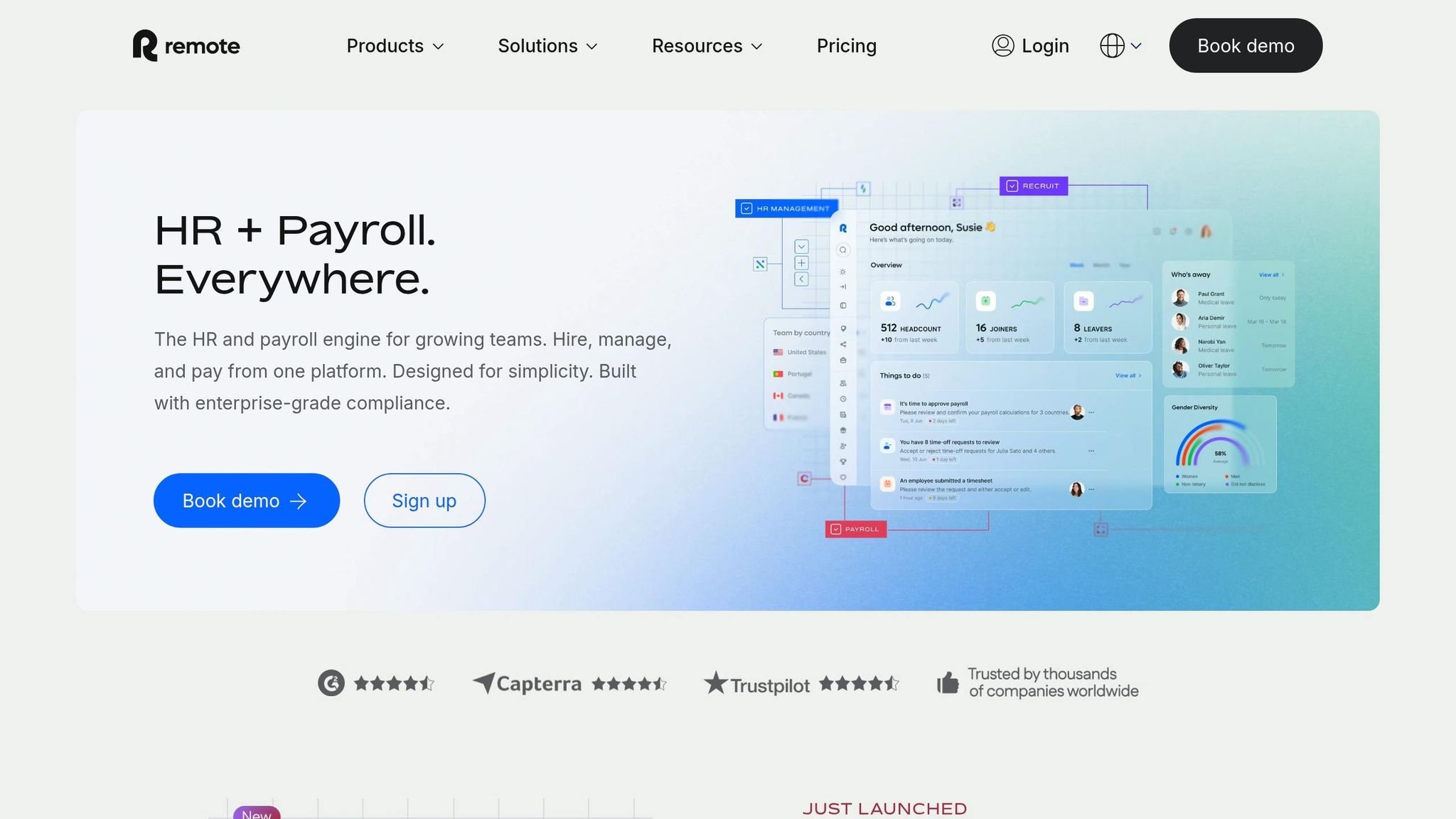
EOR platforms like Deel, Remote, and Rivermate focus on legal employment, payroll, and compliance across 150+ countries [5][6]. Their monthly fees range from $199 to $699 per employee [5]. However, EORs don’t assist with finding candidates - they step in only after you’ve identified the right hire.
Subscription-based recruitment services like RemotelyTalents.com offer a middle ground. These services combine sourcing and vetting with cost-effective pricing, making them ideal for companies hiring multiple roles over time. Unlike traditional agencies, they don’t charge a percentage of the candidate’s salary, which can save significantly on hiring costs.
Here’s a comparison of the key features across these hiring channels:
| Feature | Subscription Recruitment (e.g., RemotelyTalents) | Traditional Agency | EOR Platform (e.g., Deel) |
|---|---|---|---|
| Cost | $1,450/month (active only) [2] | 20% of first-year salary ($8,000–$12,000+) [2] | $199–$699/month per employee [5] |
| Placement Fee | None [2] | High commission per hire [2] | None |
| Focus | Sourcing & Vetting [2] | Sourcing & Vetting | Compliance & Payroll [5] |
| Guarantee | 90-day replacement [2] | Often none standard [2] | N/A (Legal employer only) |
| Speed | 5–7 weeks to hire [2] | Variable | Onboarding in 48 hours (if talent is found) [5] |
Why RemotelyTalents.com Works for Support and Operations Hiring
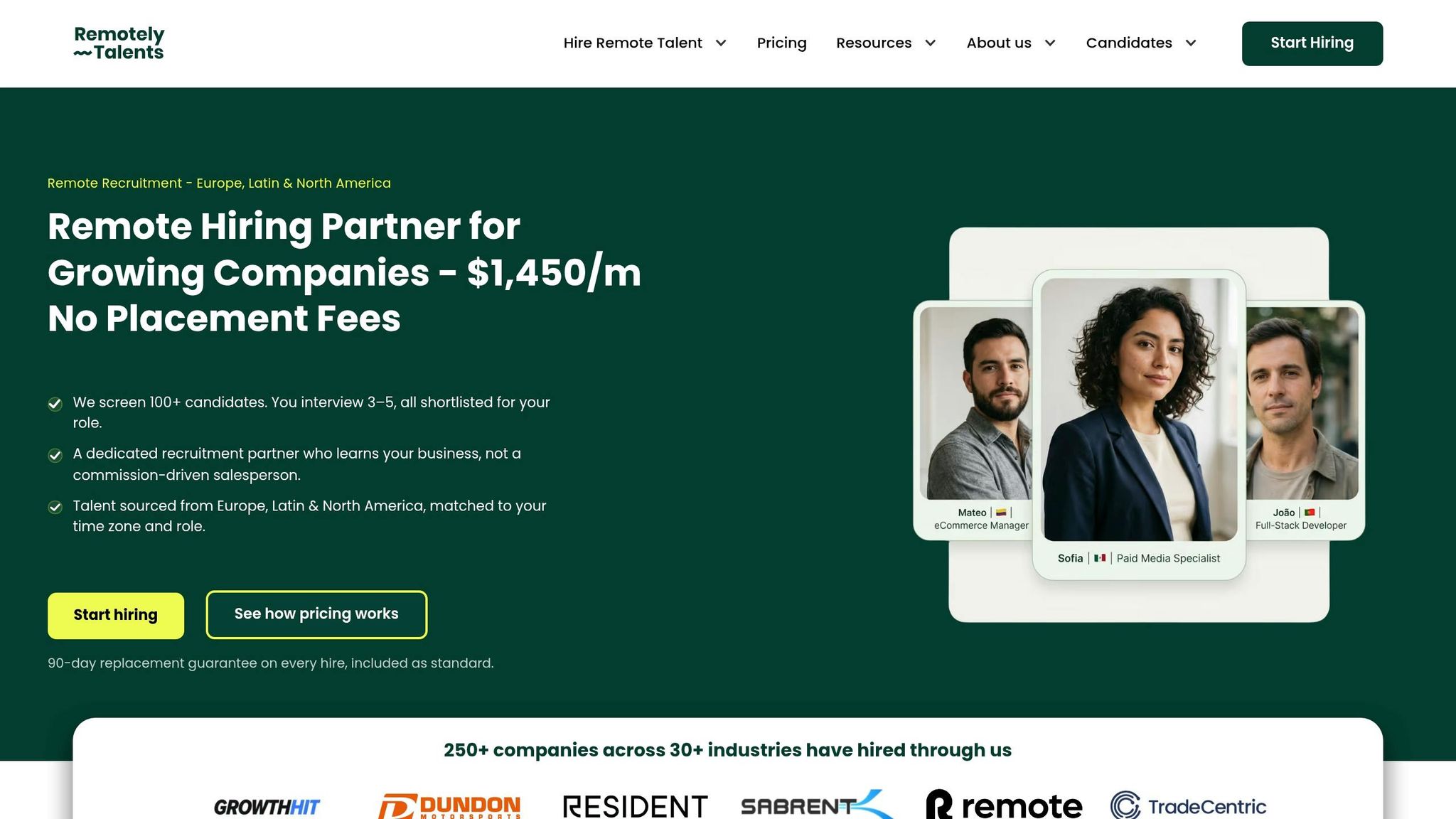
Looking beyond the numbers, RemotelyTalents.com stands out for its tailored approach to hiring remote support and operations professionals. The platform specializes in sourcing talent from Europe, Latin America, and North America, regions known for their time zone compatibility and strong English skills [2]. Their Recruitment as a Service (RaaS) model charges a flat monthly fee during active searches, avoiding the high commission fees of traditional agencies [2].
With a dedicated senior recruiter, Slack-based support, weekly updates, and access to a 10,000+ pre-screened candidate database, RemotelyTalents.com ensures a smooth hiring process. The team screens over 100 candidates to provide a shortlist of 3–5 pre-vetted professionals ready for interviews, with most hires completed within 5–7 weeks [2].
Their pricing is straightforward:
- On-Demand Plan: $1,450 per month per open role, with the flexibility to cancel anytime [2].
- Partner Plan: $1,000 per month with a 12-month commitment, allowing unlimited hires (one active role at a time) [2]. Both plans include a 90-day replacement guarantee [2].
Companies like TradeCentric and Kiki Commerce have successfully used RemotelyTalents.com for key hires. For example, Pete Geherin from TradeCentric shared:
"RemotelyTalents helped us fill three important roles as we expanded into Eastern Europe. The team was knowledgeable, responsive, and easy to work with." [2]
Similarly, Venture CPA & Tax Advisors secured qualified accounting professionals within two weeks of starting their search, while Kiki Commerce found three Shopify front-end developers in just three weeks [2].
"They delivered a standout experience on speed, price, and transparency. We found the right candidate with far less friction than with other remote talent services." - Kay Tayam, 88 Affect [2]
For companies hiring 1–5 roles in support or operations, pairing a subscription recruitment service like RemotelyTalents.com with an EOR ensures both sourcing and compliance needs are met. For larger or ongoing hiring needs, the Partner Plan offers predictable costs without the high fees typical of traditional agencies [2]. This approach simplifies hiring while maintaining compliance and managing costs effectively.
Conclusion
Creating a remote support or operations team without establishing a local entity has become much easier - just align your hiring approach with your business goals. Employer of Record (EOR) platforms offer quick and compliant solutions for small teams. Meanwhile, services like RemotelyTalents.com provide subscription-based recruitment without hefty placement fees, delivering pre-screened candidates within 5–7 weeks. On the other hand, traditional agencies often charge placement fees of around 20%, which can significantly increase costs as your team grows [2].
When deciding on your approach, weigh factors like compliance, speed, and cost efficiency. For support roles, time zone alignment is key, while operations positions should focus on measurable results. Hiring talent in Latin America can reduce employment expenses by 50–70%, with a five-person team potentially saving around $340,000 annually compared to U.S.-based staffing [3].
Speed matters. Traditional hiring in the U.S. can take three to four months per position, but remote recruitment can deliver entire teams in just 4–6 weeks. Some case studies even show recruitment cycles as short as two weeks for qualified professionals [2].
To simplify the process, ask for a hiring plan or candidate shortlist upfront to ensure quality before committing to a full recruitment cycle. RemotelyTalents.com follows a reliable model, charging $1,450 per month during active searches with no placement fees, and offers a 90-day replacement guarantee [2].
Ready to get started? Request a tailored hiring plan today, test the process with one role, and scale your team as you fine-tune your strategy.
Related Blog Posts
Read also



Ready to hire without salary-based agency fees?
Book a free 30-minute consultation. We’ll review your role, timeline, and hiring goals, then show you how our fixed-fee remote search works.